[ aaronjsmith.net ]▌
Poet · Post-Christian Theologian · Spiritual Director · Chaplain-in-Formation
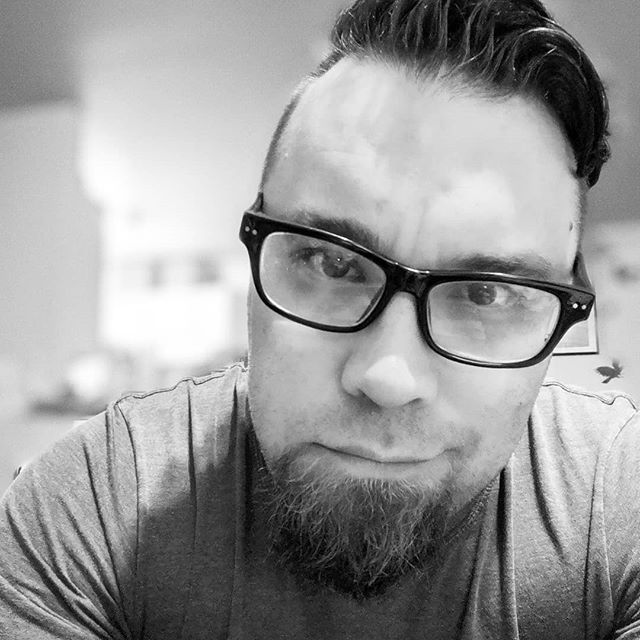
I'm Aaron — a poet, a spiritual director, a post-Christian theologian, and a chaplain-in-formation — and I'm kind of a mess. I live in Oregon, where the green is honest and the weird is celebrated. I drink too much coffee and not enough water.
Spiritual Direction
If you're in the middle of something — a faith that's shifting, a grief that won't name itself, a question that keeps returning — spiritual direction offers a particular accompaniment. Presence, and careful attention to what's already alive in you.
The Cluttered Mouth
Poetry. Prose. Prayer. Protest. Everything stuck in the throat. Essays on deconstruction, embodiment, and the strange work of staying curious about the sacred. Published unhurriedly, when the words are ready.
Curious Tarot
The cards are a mirror, not a crystal ball. I use tarot as a contemplative tool — a way of paying attention to what's already moving in you. If you're curious about what that looks like, or want to explore a reading, this is the place.
Spiritual Direction
Not advice. Accompaniment.
What drew me to spiritual direction was curiosity — the same thing that's drawn me to most things worth doing. I came to it first as a directee, not knowing exactly what I was walking into. What I found was something I hadn't expected: a space that felt like holy ground. Liminal. Unhurried. What the ancient texts call kairos — a different quality of time altogether.
I've never left that space unchanged.
[ What Spiritual Direction Is ]
Spiritual direction is a conversation about questions. Not answering them — sitting with them. Learning to hold them differently, to resist the pull of rigid certainty, to ask better ones. It is not therapy, though it can be deeply healing. It is not advice, though clarity often comes. It is careful, unhurried attention to what is already alive in you — the movement beneath the surface, the thing you keep circling back to, the place where something holy is trying to get your attention.
Every time I step into this space — as a directee or as a director — I feel it: holy ground. A threshold. The kind of time that doesn't run on clocks. That hasn't changed no matter how long I've been doing this work.
[ Who This Is For ]
People who have left the church but haven't left the longing. Those in the middle of deconstruction who still sense something sacred beneath the rubble. Queer people who have been told their bodies are problems to be solved. Survivors of religious trauma who need someone who won't flinch at their anger. People who don't have a religious background at all but feel the weight of their own inner life and want a guide. Skeptics. Mystics. Everyone in between.
If you are somewhere in that territory — this may be for you.
[ How I Work ]
My approach is trauma-informed and rooted in the contemplative tradition — Ignatian discernment, centering prayer, the practices of stillness that cross traditions. I draw on Internal Family Systems (IFS) as a framework for understanding the inner life. I work from a post-Christian, incarnational theology that takes the body seriously, honors lament, and refuses to spiritualize suffering away.
No correct doctrine is required. No belief you need to hold before you arrive. There is only the honest conversation about what is actually happening in you.
[ What To Expect ]
Sessions are about 50 minutes, held via video, typically once a month, but can be more frequently if you're in a season of particular intensity. I am not here to fix you. I am here to sit with you while you find your own way.
[ Reach Out ]
If you're wondering whether direction might be the right thing for this season — reach out. No obligation. Tell me where you are. We'll figure out the rest, together.
Writing
Prayer and protest. Sometimes both in the same line.
Writing is how I hear my heart think. It's where the thing that's too tangled to say out loud gets slowed down, turned over, worked into a sentence that can hold it. It's how I process — grief, wonder, anger, the slow erosion of certainty, the slower arrival of something truer. It is, for me, a form of prayer and a form of protest. Sometimes both in the same line.
[ The Cluttered Mouth ]
The Cluttered Mouth is where my inner life meets the world. It's not a platform. It's not a brand. It's a place where I put the things that won't stay quiet — poems, theological essays, reflections on deconstruction and embodiment and the strange persistence of the sacred. It publishes unhurriedly, when something is actually ready. I'd rather write one true thing than ten polished ones.
[ Poetry ]
My poems live where language starts to fail and keeps going anyway. They tend to be sparse, image-driven, caring about bodies, grief, what the tradition got wrong, and occasionally right. They come out of the same place as my theology — the conviction that honesty is more holy than certainty, and that the right image can do what no argument can.
[ Essays & Theology ]
The prose is where I work things out at length. Deconstruction. Kenosis. What the body knows that the mind is slow to admit. The theologians who saved my faith by refusing to protect it. I write for people who are done with easy answers and still can't stop asking the questions.
[ Subscribe ]
If you want these words in your inbox — occasionally, unhurriedly, when something is actually worth saying — you're welcome here.
Curious Tarot
Tarot for the curious.
I grew up being told tarot was off limits. Like most forbidden things, that made me more curious, not less. When I finally bought a deck, I sat with it for a long time before I did anything else — just looked at the images, let the archetypes do what archetypes do. Turns out it wasn't evil. Just misunderstood.
What I found in the cards was what I find everywhere I look carefully enough: story. Pattern. The ancient grammar of the human interior — the fool setting out, the tower falling, the star rising in the wreckage. I'd been reading that grammar in scripture and theology for years. The deck just uses different paper.
[ What Tarot Is to Me ]
I am not a fortune teller. I don't believe the cards predict the future, and I'd be suspicious of anyone who claims they do. What I believe is this: the images in a tarot deck give the unconscious something to reach for — a vocabulary when words have run out, a mirror when you're not sure what you're looking at.
I use tarot the same way I use everything else in my practice: contemplatively. Slowly. With more questions than answers. The cards don't tell you what's true. They show you what you already know but haven't said out loud yet.
[ What a Reading With Me Looks Like ]
A reading is a conversation — not a performance. You bring a question, a season, a threshold you're standing at. I draw cards and we sit with them together. I'll tell you what I see. You'll tell me what lands. We'll follow whatever thread is alive.
I'm not here to impress you with esoteric knowledge. I'm here to pay attention with you. No doctrine required. No prior experience with tarot necessary. Skeptics are welcome — I was one.
[ What I Offer ]
Single Card Pull
A focused reading on one question or theme. 30 minutes. Good for a specific moment of decision or clarity.
Full Reading
A longer conversation using a spread suited to what you're carrying. 60 minutes. Good for seasons of transition, discernment, or the big questions that don't have obvious answers.
Correspondence
You write to me with your question. I respond with a written reading — thoughtful, unhurried, in your own time. Good for people who process better on paper, or who just aren't a video-call person.
[ Reach Out ]
If you're curious — about tarot, about what a reading might look like for you, or about anything on this page — reach out. There's no obligation ti start a conversation.
Aaron J. Smith
Formation
I'm a poet, a spiritual director, a post-Christian theologian, and a chaplain-in-formation — and I'm kind of a mess. I live in Oregon, where the green is honest and the weird is celebrated. I drink too much coffee and not enough water.
I've been deconstructing and reconstructing for over twenty years. Religious trauma and church hurt are part of my story. So is the slow, strange work of finding that the Jesus story — stripped of the institution's need to manage it — still has something worth following.
[ Theological Formation ]
My theology is post-Christian in the sense that I no longer hold the dogmatic structures of Christianity — but I have not left the tradition so much as I have learned to read it differently, against itself, through the lens of those it has harmed. The through-line in my theological thinking is kenosis: God's self-donation as the shape of divinity itself, which means that power-over is always a theological problem, and vulnerability is always a theological resource. My framework — incarnational, lamenting, liberative — grounds my work in the body, takes suffering seriously rather than spiritualizing it, and orients everything toward liberation, for the marginalized first.
[ Chaplaincy Formation ]
I am in the process of ordination through the Order of Hildegard, a diverse, cross-vocational, inter-spiritual Order and Community of Practice. My chaplaincy formation is oriented toward community and interfaith chaplaincy — accompaniment outside the walls of any single tradition, in the ordinary places where people are actually suffering and seeking.
[ Send a Note ]
Or reach me directly at contact@aaronjsmith.net